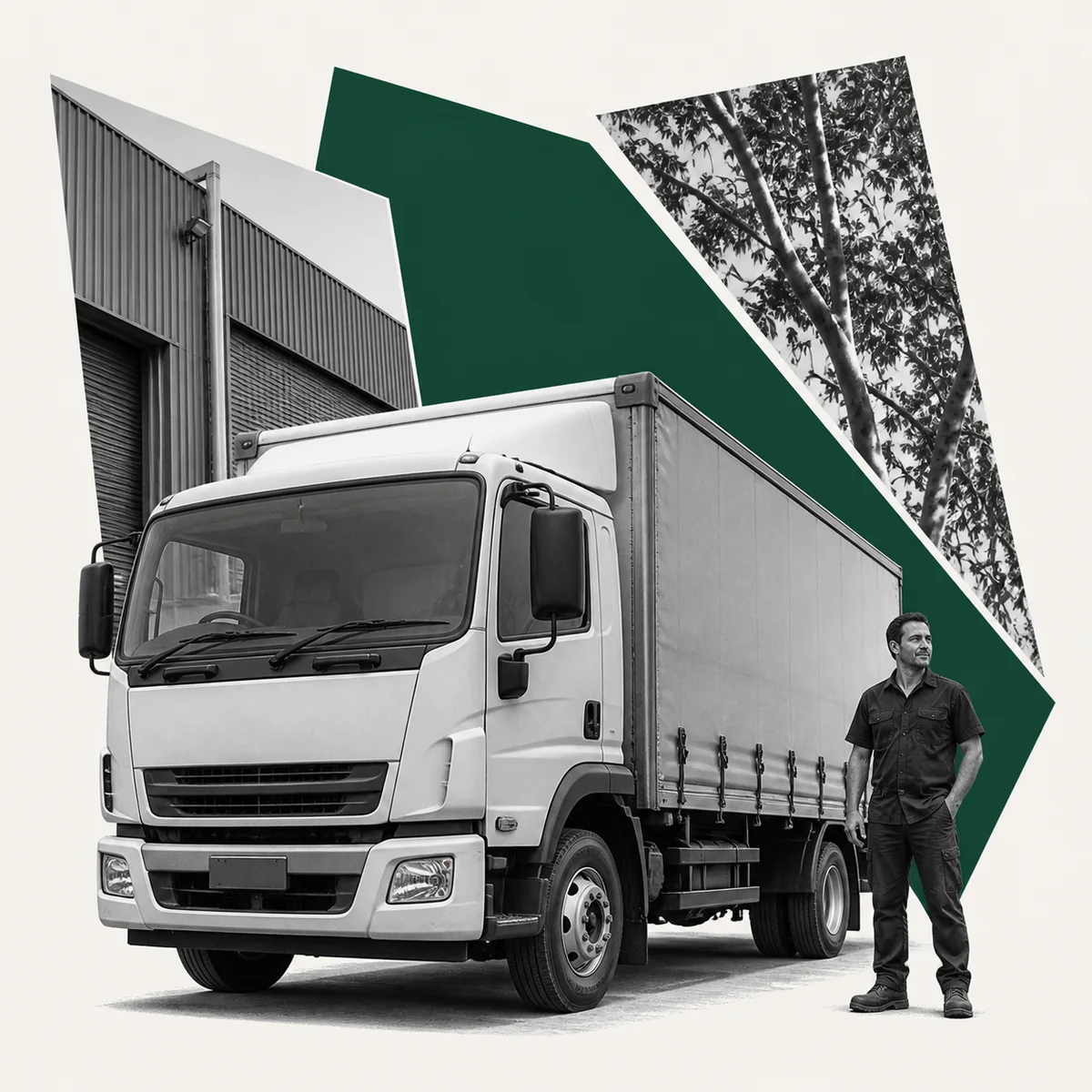
Start with the truck you will actually put to work
A prime mover, tipper and refrigerated rigid have different jobs and cost bases. Record the configuration, body, age, kilometres, intended routes and load. Separate a service body, refrigeration unit or other modification in the supplier quote.
Explain the reason for buying. Replacing a truck on established work differs from adding capacity for a contract or purchasing an owner-operator’s first vehicle. Include the expected start date, available work and how the business manages a delay or cancellation.
Work through the monthly operating cash
In this hypothetical example, an additional truck is expected to collect $35,000 in a month. The figures below are entered cash assumptions, including an illustrative $3,200 finance payment; they are not a quote, a market cost benchmark or lender-assessed affordability.
| Monthly cash item | Illustrative amount |
|---|---|
| Customer receipts | $35,000 |
| Fuel | $9,000 |
| Driver costs | $10,000 |
| Insurance, registration and other fixed vehicle costs | $1,500 |
| Maintenance and tyres paid in the month | $2,000 |
| Allocated business overhead | $1,000 |
| Assumed finance payment | $3,200 |
| Cash left after these outflows | $8,300 |
Swipe or scroll the table sideways to see every column.
The listed outflows total $26,700. If receipts fall to $28,000 while those costs remain unchanged, the surplus falls to $1,300. A further $6,000 repair then creates a $4,700 shortfall. Replace these figures with actual dates and quotes; annual insurance bills and uneven repairs do not arrive in equal monthly instalments.
Also check the first receipt. Work invoiced this month may be paid later, while fuel and wages are already due. Keep that operating gap separate from the truck deposit and loan amount.
Compare the purchase structure and cash contribution
Ask for the truck price, GST basis, deposit, trade-in allowance and payout on any vehicle being replaced. Identify delivery, modifications and initial running costs that need separate cash. Whether extras can be financed must be confirmed for the proposal.
Compare a loan-funded purchase with leasing against your intended ownership and replacement date. Obtain the fees, payment dates, security and guarantee requirements, early-payout terms and final obligation. A smaller regular payment is useful only if the complete commitment fits the business.
Used trucks and private sales: prepare before paying
Collect the vehicle identifiers, seller details, service history and an independent condition assessment. Ask about immediate repairs, tyres and the remaining work the vehicle can realistically perform.
Use the official PPSR vehicle-search guidance for the correct VIN or chassis details and retain the result. If a security interest appears, establish the payout and release arrangements before proceeding. A vehicle search and a mechanical inspection answer different questions.
Check the seller’s payment deadline and deposit conditions alongside the finance timetable. A purchase commitment does not become conditional on finance simply because you intend to borrow. Have the actual sale terms checked before committing.
Make the balloon and fleet replacement dates visible
If the proposal includes a balloon, identify the final amount and how it would be paid. For example, $24,000 due in 48 months requires $500 a month to be set aside if nothing is saved yet and no return on savings is assumed. That saving sits alongside the regular repayment.
Compare a lower resale value and an earlier replacement. With several vehicles, map all final payments and existing debt commitments together; a manageable truck repayment can coincide with another vehicle’s balloon.
Bring the vehicle and the operating case to Atlas
We can help review the funding need, compare the cash and ownership implications of the options being considered, and identify what is still needed to progress the enquiry. Send the vehicle details, quote and target purchase date with the work and operating assumptions behind it.
If the truck purchase also creates a fuel or payroll gap, make that clear at the start. It belongs in the same business conversation even when it needs a different funding structure.
What to prepare
- Truck configuration, identifiers, quote and any separately priced body or fitted equipment
- Business history, available work and customer payment terms
- Deposit/trade-in position and current vehicle finance commitments
- Fuel, driver, maintenance and overhead cash forecast
- For a used sale: condition evidence, seller details and relevant PPSR information
- Payment deadline and a plan for any balloon or early replacement
Common questions
Can I explore finance for my first truck?
Yes. Explain your experience, the vehicle, the work available and the cash you can contribute. A first purchase may have less trading evidence than a fleet replacement, so the preparation matters. A contract or ABN alone does not establish approval.
Can a private-sale truck be considered?
Some providers consider private sales. Confirm the sale and evidence required before committing, including seller identity, vehicle details, condition and any existing finance.
Can a truck and trailer be included in one enquiry?
Yes. List each asset and price separately, including fitted equipment. Atlas can help assess the combined funding need; whether one agreement or separate arrangements are available depends on the proposal.
How do I compare truck finance rates?
Compare the same amount and payment timing, then include fees, the term, any final balloon and early-payout terms. Ask for a full payment schedule; the headline rate alone does not show the cash commitment.
Should I rely on selling the truck to pay the balloon?
Treat the sale price and timing as uncertain. Test a lower value and the cash needed to cover a shortfall, rather than assuming a future sale or refinance will settle the debt.
General information only. Product terms and availability vary. Check the actual proposal and obtain advice appropriate to your circumstances.